Just do it – But do what, exactly?
“Just do it.”
Few phrases have inspired as much action and as much frustration.
While the message is powerful, it assumes something most people don’t have:
Clarity.
The world is filled with encouragement to be more mindful, more disciplined, more compassionate. The intention is there. The understanding is often there.
And yet, the gap remains.
A quiet thought lingers beneath the surface:
“If I could, I would.”
Commitment is often misunderstood.
It’s seen as intensity, effort, or willpower.
But real commitment is something far more grounded. It is the willingness to continue, even when something is uncomfortable, unclear or slow.
And yet, even with commitment, many people remain stuck.
Not because they lack discipline, but because they lack definition.
“Great things are not done by impulse, but by a series of small things brought together.” — Vincent van Gogh
Without learning how to develop good habits through specific micro-actions, effort becomes guesswork.
And guesswork rarely sticks.
The trap of “Just Do It”
“Just do it” often leads to two patterns:
- Acting impulsively without direction
- Overreaching without a clear foundation
Both create the same result: Iinconsistency, frustration, and eventual disengagement.
This is not a failure of discipline.
It is a failure of design.
From intention to practice
Growth does not come from intensity.
It comes from structure.
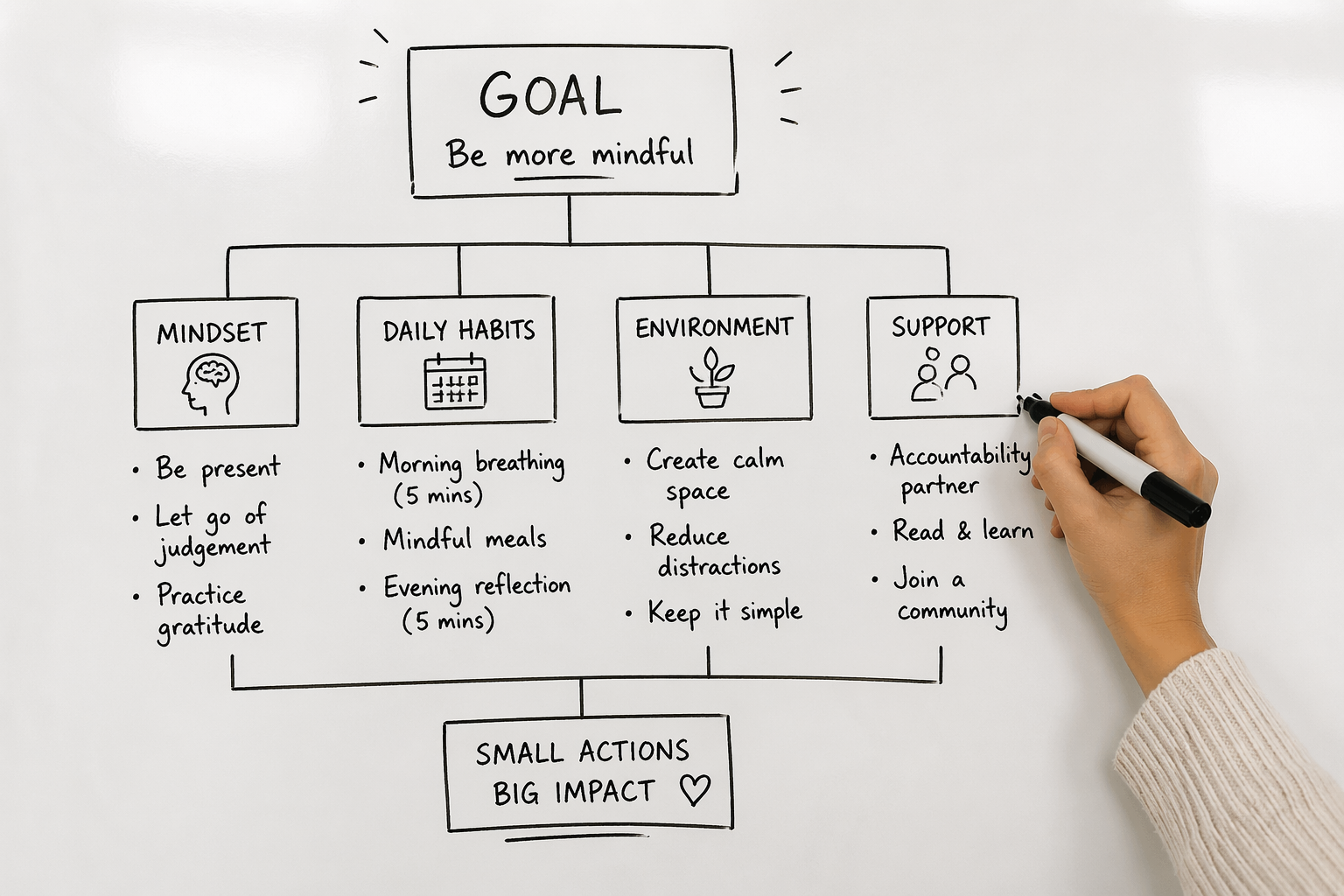
When a goal is broken down into small, intentional actions, something shifts:
- Progress becomes visible
- Feedback becomes immediate
- Motivation becomes sustainable
- The path forward becomes clear
A simple Blume practice
Think of a goal.
This could be a quality you want more of, like mindfulness, discipline or patience.
Or it could be a practical outcome, like time management, ritual or self-care.
Start doing
What are the specific actions that would bring this quality or outcome into daily life, not in theory, but through behaviour?
If the goal is to practice mindfulness in daily life, this might include:
- Pausing before responding
- Noticing emotional shifts in the body
- Giving full attention to one task at a time
Stop doing
Personal growth and development is not only about adding.
It is also about removing.
“The journey of a thousand miles begins with one step.” — Lao Tzu
What behaviours currently replace or undermine the desired ones?
- Living by default and reacting without awareness
- Multitasking to avoid discomfort
- Defaulting to autopilot habits
Creating a recipe
When small, intentional steps are practiced consistently, something shifts.
“Just do it” stops feeling overwhelming, and starts becoming natural.
Not because it’s easy.
But because it’s clear.
Progress is not built on intensity, it’s built on repeatable and intentional steps.